In todays lesson we looked at chorus one, we split into groups and each took a verse and then we came together as a group to do the last verse. When working on our verse we wanted to use contemporary movement ideas to go with the words that are scripted, as well as this we used levels to make it more interesting to the audience rather than just performing the whole chorus standing up. Because of this we decided to start kneeling, when choreographing we looked at the words, some of our actions are associated with these, one example of this is "radiant sun" when we say this we bring our arm up, this is to show something rising like the sun. Another example of this is "gates of Thebes" we stand back to back with our arms up, crossed over with our fists clenched, this suggests that we are locking something out like a gate.
We then looked at the last verse of chorus one, we decided to make this different to the other verses, we all come together in an inverted semi-circle, and use body percussion. We split into groups and used different rhythms to create a layered effect. In my opinion i think that this goes really well with the rest of the chorus, although it is contrasting, they compliment each other. When doing this we found that the hardest part was keeping in time with each other when we changed rhythms on "war is dead" however once we had worked it out we were in time, we all had to decide that there were four counts after this before going back into the main rhythm.
Thursday, 10 March 2016

Monday, 7 March 2016
Friday 17th December 2015 - PAB Criteria 3 Scenario
I am taking my performance of Annie to the Edinburgh fringe festival, but I have a number if tasks that I need to complete before hand, as part of my role as producer.
I am going to need to get insurance to make sure that I am fully covered in case anything goes wrong during rehearsals or performances. I wanted to use a well known company that have had experience in the performing arts industry, this is because there is a lot of specialist equipment that is used such as strobe lighting and large set design. This means that it was better for me to use a specialist company that have worked on projects and shows before, because if anything was to go wrong I wouldn’t have to worry about large costs and problems with claiming on the insurance. There are no major dangers with my show apart from any problems that could potentially arise with the set or lighting equipment, or if any of the performers fall off stage and injure themselves. Showtime insurance is a private business that provides insurance to entertainment companies and projects. They offer both short and long term insurance cover and their premiums start form £135. Short period cover lasts for 180 days, public liability insurance protects you from legal claims against you for bodily harm and to their property. It also covers the cost of defending any legal action against yourself. However it doesn’t protect you from any activities involving animals classified by the dangerous dogs act 1991 as well as the use of fire and guns. As my show is Annie I use a small dog that is not classified by this act and we use no dangerous hazards such as fire, therefore this type of insurance is perfect for us to use.
It is important to have a lighting technician for a show, as it can be difficult to tell someone else on the day what is needed if they have not been to any of the past rehearsals. They may also have more knowledge than anyone else, and so can help to improve the show. I talked with the Arts Organisation BECTU to work out the appropriate hours that my technician should work, and how much pay I need to give them. BECTU is a company that works alongside media and entertainment businesses to make sure everyone is working fair hours, with fair pay; like a trade union. They work for everyone in film, theatre, live events and other forms of digital media. This is important because it means everyone can work fairly, and will be able to live off of the money they make from their jobs. It is easy for people to work for less money than fair, and so trade unions such as BECTU are created so that everyone can work fairly. For specific information on ideal payment rates for theatre technicians, we would need to speak to BECTU more specifically. Most rates and pay rates listed are for technicians that work in film and TV. While these are not exactly what we need, they can give us a rough guideline of what a technician may be earning, dependent on the size of the production. In my opinion I think it is important for people like lighting technicians to have a company like BECTU as they are a trade union and therefore they are entitled to rights such as appropriate payment and fair treatment.
The questions I need to ask the hire company are…
What kind of space is suitable to use strobe lighting in?
How much it will cost to hire for the time we need?
How long is the recommended time for a strobe lighting to be on for?
What kind of connections and fixings does the light need?
What size is the light?
I need to give the hire company information about the kind of lighting desk that the venue we are using is, as well as this I need to give them the room measurements and sizes to see what size strobe light would be most appropriate, this is to make sure the audience are safe as well. If the light was too big for the space being used it could have some effect on audience members and performers and may not be safe. Although there are no legal requirements when using strobe lighting, there are some dangers including, people with epilepsy and those who suffer with photo sensitivity may have difficulty when watching these effects. Therefore I am going to put a warning on all types of advertisement that it is advised that anyone with these conditions shouldn’t attend the performance to avoid any Issues, to make sure that no one is discriminated against I will hold one performance of the show where the strobe lighting will not be used to make sure that no one is discriminated against I will hold one performance of the show where the strobe lighting will not be used to make sure that everyone who wants to see the performance is able to. As well as advertising that strobe lighting is going to be used there will also be an announcement before the show starts to further warn the audience.
What kind of space is suitable to use strobe lighting in?
How much it will cost to hire for the time we need?
How long is the recommended time for a strobe lighting to be on for?
What kind of connections and fixings does the light need?
What size is the light?
I need to give the hire company information about the kind of lighting desk that the venue we are using is, as well as this I need to give them the room measurements and sizes to see what size strobe light would be most appropriate, this is to make sure the audience are safe as well. If the light was too big for the space being used it could have some effect on audience members and performers and may not be safe. Although there are no legal requirements when using strobe lighting, there are some dangers including, people with epilepsy and those who suffer with photo sensitivity may have difficulty when watching these effects. Therefore I am going to put a warning on all types of advertisement that it is advised that anyone with these conditions shouldn’t attend the performance to avoid any Issues, to make sure that no one is discriminated against I will hold one performance of the show where the strobe lighting will not be used to make sure that no one is discriminated against I will hold one performance of the show where the strobe lighting will not be used to make sure that everyone who wants to see the performance is able to. As well as advertising that strobe lighting is going to be used there will also be an announcement before the show starts to further warn the audience.
For some of my group numbers I need an experienced stilt walker to find the appropriate performer I am going to use spotlight. Spotlight was first founded in 1927 and is a UK casting resource with contacts in the industry. Currently on Spotlight there is over 60,000 performers including actors and actresses, child performers, presenters, singers and dancers. It is thought to be the best way to market yourself as a performer for professional film and television as well as stage. There are thousands of production companies, advertising agencies, independent casing directors and broadcasters that use spotlight as their casting resource. Some clients include the BBC, ITV and Channel 4 as well as smaller production companies and individual casting directors. If you join as a performer you will receive a web page including your acting cv, photos and video clips that is available to casting agents working in the industry. Daily job updates that may be suitable for you to audition for, as well as career advice that includes one-to-one advice on CV's and career development. I have chosen Spotlight because it is used by many performers and directors etc and is well known, I thought that this would give me the best choice of performers as it has more members then any other online casting directory. However if I do not find the right person I can look on casting call pro, which is a free version of Spotlight. On the other hand there are some issues with using online casting directories such as spotlight and casting call pro, such as unlike an open casting call you do not get to meet the performer. This is more of a problem for us as we are a small theatre company therefore we all have close friendships with each other and we need to find a performer who is going to fit in well with our company. As well as this the fee of Spotlight is a lot for a small company like us and therefore we will have to review our budget to make sure that we can afford to pay out for this.
The Stage is a theatre industry newspaper that serves to provide news for the UK performing arts and entertainment industry, it was first set up in 1880 and is owned by the family of one of the founders. The articles are published online and printed every Thursday. The stage provides information from across all aspects of the performing arts industry from advice to help performers, directors and casting agents to reviews on shows on and off the West End. There are also jobs listed on The Stage from auditions for different types of theatre, to back stage and behind the scenes jobs, there is also front of house and marketing and finance jobs. As well as this there is also information about training institutions, this is helpful for younger performers who are interesting in studying performing arts at a higher education level. We are in contact with a theatre reviewer to come and see our Brighton preview, this gives us a chance to get some feedback before our final performance to improve and make any changes that need making, as well as this it gives us a chance to see how an audience responds to our performance. With a published review on the stage, it gives us an advertisement opportunity as hopefully potential audience members can look and be tempted to come and see. However on the other hand if we get a bad review it may put off people spending their time and money to watch our performance.
The ITC is the independent theatre council the management association for private theatre. They are based in the UK and work in drama, dance, physical and musical theatre, circus, mime and street arts. They represent those who manage and produce professional performing arts, they believe that good art thrives on good management. They recognize that performing arts thrives when management have a passion for the art rather than the prospect of profit and the value of belonging to a community. There aims are to bring high quality art to wide audiences, provide the best possible working conditions and pat and promote inclusion and equal opportunity. They interact with small theatre companies by giving them unlimited advice on all topics including tax, contracts and copyright, they also have national and regional networking events to help small ad large companies build a community of performing arts professionals.
Monday, 29 February 2016
Monday 29th February 2016 - Peter Pan Personlality Research
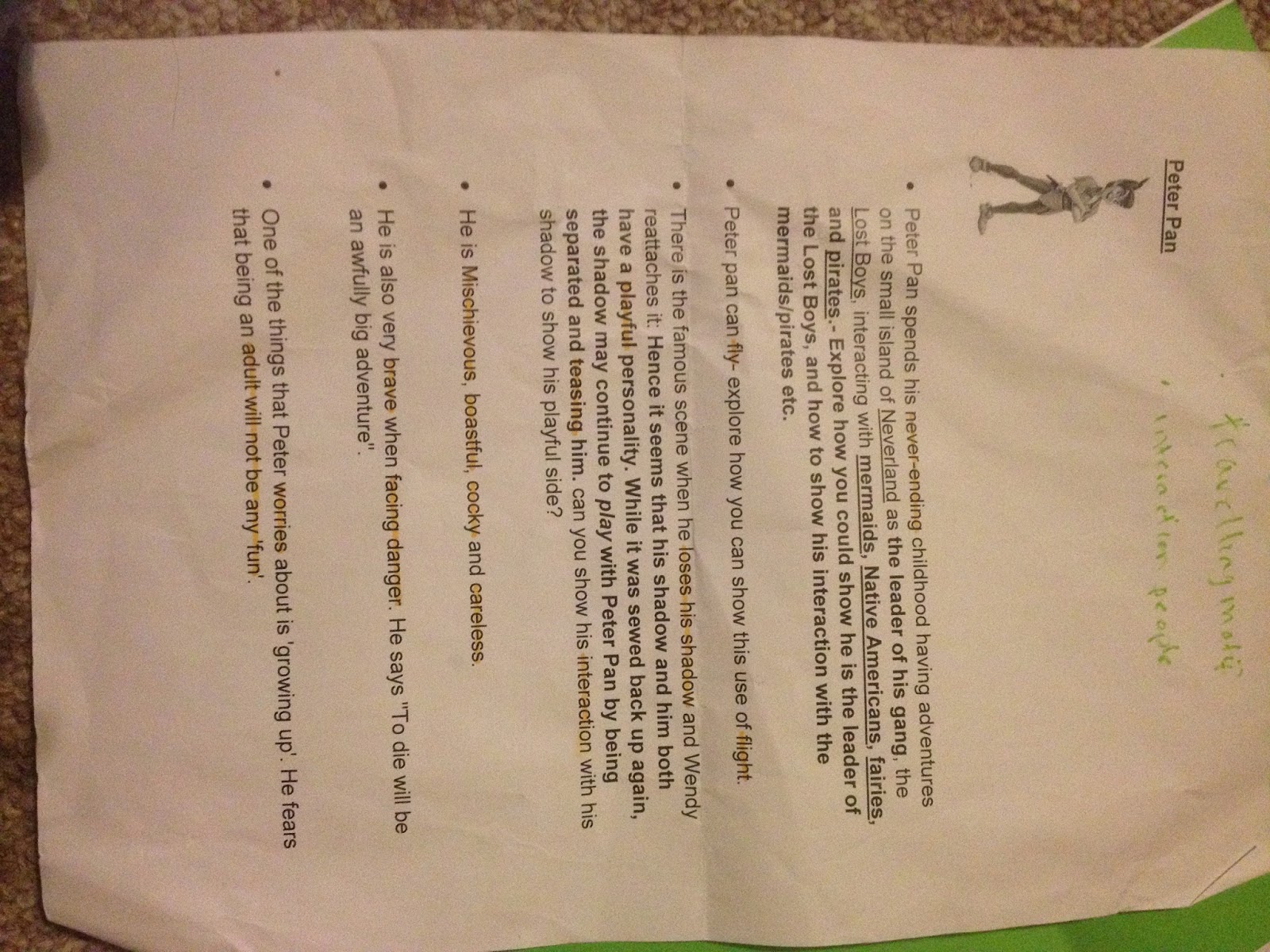


The idea of Peter Pan
He is thought to be a charming and charismatic character, who is childlike and never wants to grow up. He is able to do things that other children cannot such as flying. Peter Pan is the leader of a group of boys also known as the Lost boys, he leads these children on adventures with fairytale creatures like fairies, pirates and mermaids. However he longs for a mother and a family, because of this he entices a girl called Wendy and takes her and her two brothers back to Neverland with him.
Peter Pan Syndrome
Peter Pan syndrome is a psychological disorder was first recognised by Dr.Dan Kiley in 1933, it is thought to affect many people, but mostly men. These people have gone passed puberty but are stuck in adolescence however they want to grow up. This is also the idea of wanting to grow up but on the other hand not wanting to be responsible for anything or anyone. They usually have issues with irresponsibility, anxiety, loneliness and a poor memory. It is very common that although they may show they have lots of confidence and are happy and healthy, they actually have very low esteem. It is thought by Dr. Kiley that the cause of this is down to fault of someone's parents, usually distant fathers and weak mothers. Other signs and symptoms include...
- Excessive outbursts of emotion or blunt behavior.
- High levels of anger
- Happiness that turns into extreme panic
- Frustration, self-pity and depression.
- Difficulty expressing feelings of love
- Always feeling guilty
- Difficulty relaxing
- Undependable
- Manipulative tendencies
This disorder is not recognised by the World Health Organisation, neither is it acknowledged by the American Psychiatric Association as a mental disorder. It is regarded as Psychopathology.
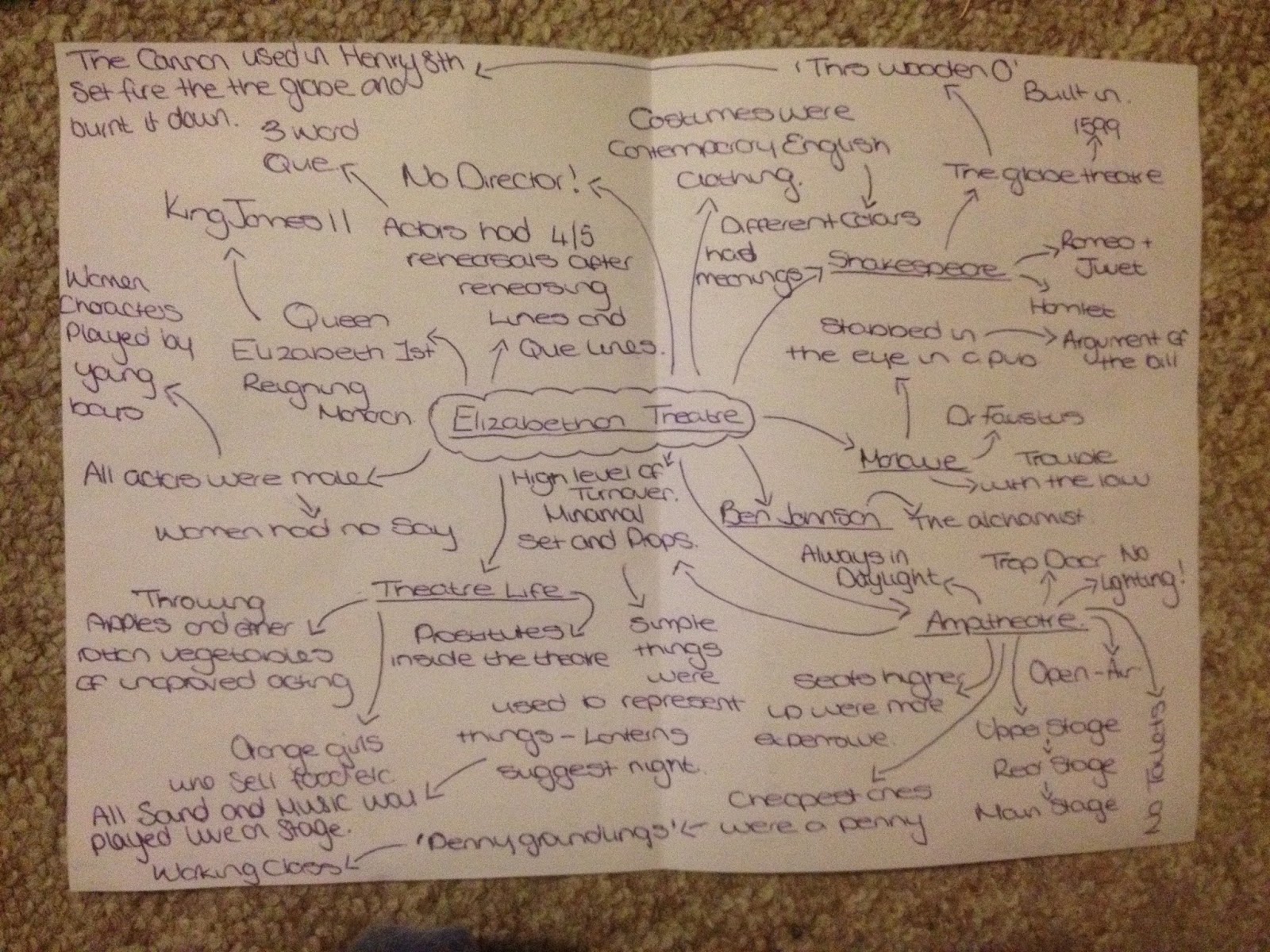


Monday 29th February 2016 - Devised pieces (Lesson 1)
What went well - I have been working on the difference of movement and character in the two sections - the happier section and the dark section. I want there to be a clear distinct between these, in both the movement material and the use of interpretive skills I use when dancing. I have thought about this when choreographing and in response to this I have made the second half a lot slower with few sharp movements, this shows that he is dark and sly, this then builds up and the movements get bigger and faster, this shows how Peter is spiralling out of control. I am happy with the movement material that I have choreographed, I think that it is appropriate to the theme of the dance. I have include movements that relate to Peter Pan, for example i have used the idea of sword fighting by including an arm sequence that circles and twists around, i repeat this movement on two levels.
Even better if - I need to work on the timing of this dance, this is because everyting i dance with the music the timing changes, this means that i have to work more with the music to make sure that i am dancing at the right time in the music. As well as this i need to focus on my focus and eyeline when dancing, when i was rehearsing i noticed i was looking down at moments in he choreography, i need to work on this in the next rehearsals to make sure that in the performance i am looking up throughout.
Thursday, 25 February 2016
Thursday 25th February 2016 - Character Improvisation
In todays lesson we looked at the concept we are going to use, we are looking at the difference between those who are very well off and those who are displaced, for example refugees. We started by doing an improvisation task based around scenarios that could possibly occur in a refugee camp. This was helpful as we got to explore the way that a "displaced" person may live, we really got to look into different types of characters as we had to come up with a scenario - ours was, we had arrived to the camp in a crowded bus, there was a couple and two children who had lost their parents. We then had to interact with others from different groups, this allowed us to build our ideas further as our characters had met new people. We had different activities that needed to be done such as finding food and putting up a tent for shelter, because of this we had to communicate with each other like if we were actually refugees, because of this we were able to build the improvisation to make it more realistic.
We then looked at the upper class people, we started by having to pose for a family picture, through his we had to show wealth, power and hierarchy. We had to use different body language in this exercise compared to our last task this is because the refugees are vulnerable, have no possessions, their social status is very low and struggling to survive. The two social groups are at complete opposites and therefore the way that we hold ourselves, facial expressions and the way we communicate with each other needs to show the audience these differences. After this we had to do a second improvisation task where we had to act as if we were at a family dinner, when speaking we had to project more and make sure that every word is pronounced and articulated correctly, this is because usually upper class people are very well spoken compared to those who are perhaps lower classed, this is linked to the quality of education that different social groups are likely to receive. For example refugees are likely to receive no or poor education however royalty and other wealthy families are more likely to receive a higher quality education. As well as this the priorities of the different groups also vary, one example of this is refugees main priority would be to survive with basic food and shelter however those with more power and wealth care more about the quality of the possessions they own and they way they live their lives.
This lessons has helped me understand the concept we are using for Antigone, as we practically got to see and understand the difference in the two groups of people that we are basing the show around - the "displaced" and the royalty.
Monday 22nd February 2016 - Gernica


Our stimulus that we used for this lesson was Pablo Picasso's, Guernica. Which is a painting based on the bombing of Guernica this is a village in Spain, for this task we had to come up with different emotions and adjectives that would be associated with this painting.
- Panic
- Fear
- Chaos
- Desperation
- Anger
- Destruction
- Distress
- Escape
- Grotesque
In this lesson we learnt a few motifs that represented different things for example we learnt a floor motif that showed people crawling away from something and trying to escape. We also learn a jumpy motif that represented the chaos of the situation, as well as this the impact of the bombs continuously dropping. We then had to work on solos, this was made from a range of positions that we came up with from the adjectives that we just discussed. Once we had done this, we had to individually link them using interesting transitions, I wanted to use different movements to link, this is because the painting is very abstract therefore I didn't think that simple common movements would be appropriate for this stimulus. I enjoyed doing this task as it gave me a chance to come up with my own choreography and interpret the painting in my own way. We then got into groups and started to choreograph a group dance using the solos and other motifs that we had previously learnt. We decided to use choreographic devises to develop our dance, we used fragmentation, retrograde and repetition. We also changed the spacing and directions so that we can interact with each other. As well as this we worked on a contact sequence, this shows that we are scambling through each other and the rumble left by the bomb, there are also moments in the dance where we break away from each other, this shows that people lost each other and were running around trying to find safety. At the end of the dance we all scramble to each other and collapse as if to lose hope.
Subscribe to:
Posts (Atom)